


Novel Adaptation Versus Original Musical: What Wins?

A portrait locked away in an attic. A young man whose beauty never fades. A bargain that turns pleasure into ruin. In the debate over novel adaptation versus original musical, the question is not simply whether audiences prefer the familiar or the new. It is whether a story can survive transformation without losing the dangerous pulse that made it endure.
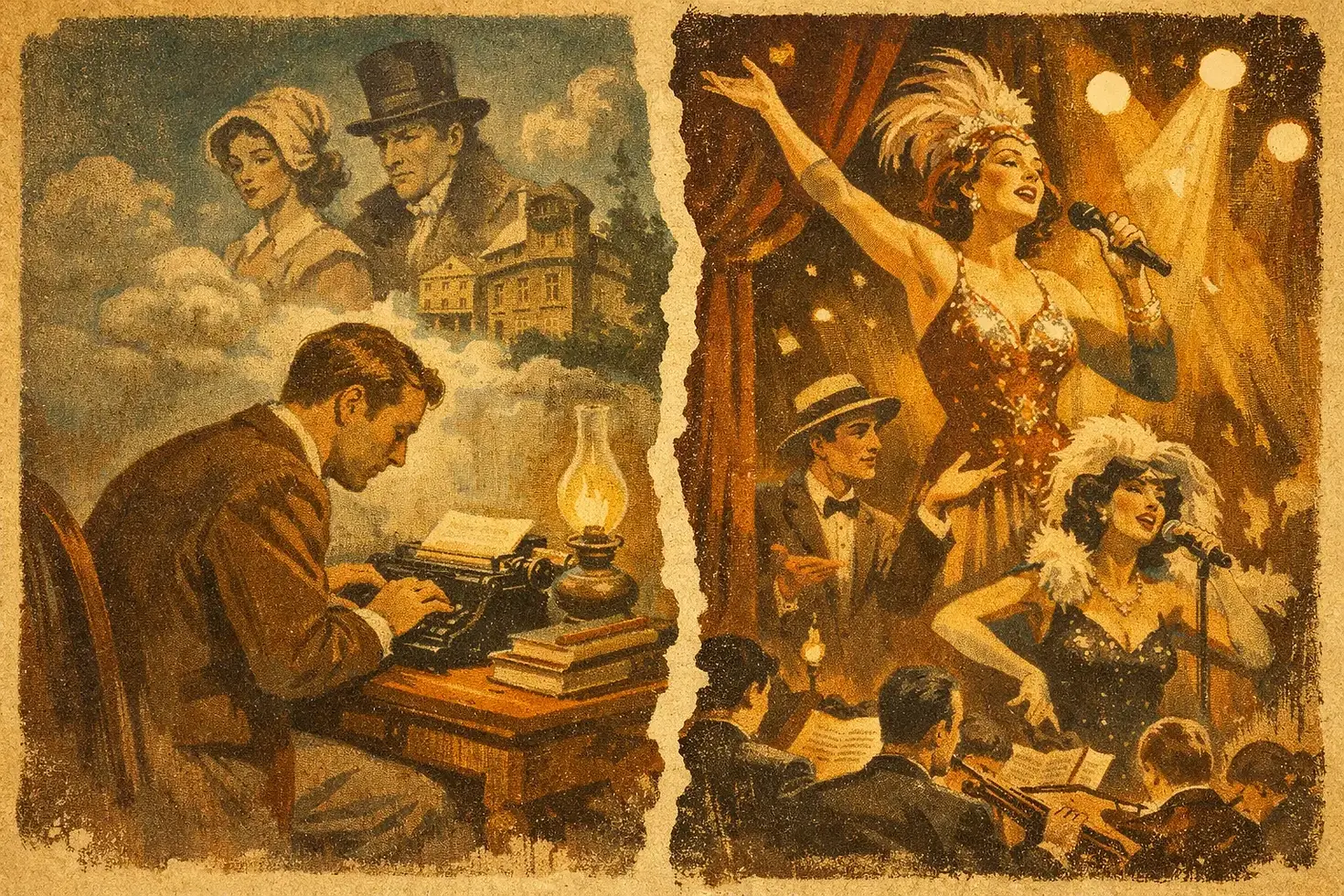
A great musical adaptation does not place songs around a beloved book like decorative frames. It finds the emotional machinery already turning beneath the prose, then gives that machinery a voice. An original musical begins with a blank page and the thrilling burden of creating its own mythology. Both can be extraordinary. Yet they ask different things of their writers, performers and audiences.
Novel Adaptation Versus Original Musical: The Essential Difference
An original musical has absolute freedom. Its creators may build a world, invent its rules and decide precisely when music enters the room. Characters can be designed around a musical language from the first moment. A comic number, a sweeping declaration of love or a final, devastating reprise can all grow from the same original dramatic blueprint.
That freedom carries risk. Without an established story, a new musical must earn the audience's trust quickly. It has no remembered line, no familiar figure, no literary shadow waiting in the wings. Its score, book and visual identity must persuade people to step into an unknown world and believe it matters.
A novel adaptation arrives with a different kind of power. The source material may already possess atmosphere, conflict and an audience eager to see how treasured scenes will be realised. A classic can lend a production instant dramatic weight. For theatre-goers, there is a particular pleasure in recognising the threshold of a favourite story, then crossing it into a form that feels vivid, immediate and alive.
But recognition is not enough. A novel can spend pages inside a character's mind, linger over a room's faded grandeur or allow a narrator to make the point with exquisite precision. The stage has no such luxury. It must reveal desire, deceit and consequence in action. Music becomes more than accompaniment: it carries what prose once described.
Why Certain Novels Are Made for Musical Theatre
Not every famous book wants to become a musical. Plot alone is a poor reason to adapt anything. The strongest candidates contain emotional extremes, memorable relationships and a world with enough texture to inspire a distinct sound. They also hold questions that cannot be settled neatly, because music thrives on feeling that overflows ordinary speech.
Oscar Wilde's The Picture of Dorian Gray has that quality in abundance. Its beauty is poisoned by vanity. Its wit conceals menace. Its central horror is not merely supernatural but moral: what happens when someone believes consequence belongs to other people? Such material creates rich opportunities for songs of seduction, obsession, fear and denial.
A faithful adaptation need not reproduce every chapter or every exchange. Faithfulness is not a matter of counting scenes. It is the preservation of a story's spirit, its stakes and its most unsettling truths. If Dorian's terror of ageing becomes a song, or the portrait's silent accusation is expressed through a recurring musical motif, the adaptation is not abandoning the novel. It is translating it.
That distinction matters to readers who approach a classic with understandable protectiveness. They do not want a familiar title stripped of its intelligence for the sake of easy spectacle. Nor do they necessarily want a museum-piece retelling. The most satisfying stage version honours the source while making a clear case for its own existence.
Music can reveal the thought beneath the dialogue
In a novel, a character may conceal their intentions while the narration quietly exposes them. On stage, the score can create the same tension. A bright melody can carry a cruel sentiment. A tender duet can fracture as two people reveal they are singing for entirely different reasons. A repeated phrase can return later, altered by guilt, grief or revelation.
This is where a sung-through musical can be especially potent. With little distance between spoken scene and song, the audience remains inside the pressure of the story. The music does not interrupt the drama. It becomes its bloodstream.
For gothic material, that approach can be electrifying. A dark orchestral colour, a hush before a confession, a chorus that seems to close around a character - these theatrical choices give shape to dread. They make the audience feel the cost of a decision before the plot has fully delivered its punishment.
The Trade-Off: Familiarity Versus Surprise
The apparent advantage of an adaptation is familiarity, but familiarity is a double-edged blade. Some audience members arrive knowing every turn of the plot. They know which door should never be opened, which promise will not hold and which character is walking towards disaster. The production cannot rely on surprise alone.
Instead, it must create suspense through interpretation. How will a cherished moment sound? What will the design reveal about the world? Which hidden feeling will a performer bring to a character who once existed only in the reader's imagination? Knowing the destination can make the journey more tense, not less. The audience watches the inevitable approach with a kind of delicious dread.
An original musical offers the opposite pleasure. No one knows what waits behind the next scene. It can astonish without comparison, and when it succeeds, it may create the very mythology that later generations cherish. Yet that absence of expectation can make it harder for audiences to choose a ticket when time and money are limited.
The choice, then, is not between artistic courage and commercial safety. Both forms demand courage. An original work must make people care about a story they have never heard. An adaptation must justify changing the form of one they already love.
What a Faithful Adaptation Owes Its Audience
A production based on a novel owes readers respect, but respect should never mean caution without imagination. The goal is to identify the elements that are non-negotiable: the moral conflict, the emotional temperature, the relationships that drive the tragedy and the language or atmosphere that gives the story its identity.
It also owes new audiences clarity. A musical should welcome the person who has never read the book as generously as the person who studied it at school or returns to it every few years. The plot must stand on its own feet. Characters must be legible in the moment, not only to those carrying prior knowledge into the theatre.
That balance is particularly valuable for older teens and adults drawn to literature but seeking a night at the theatre with genuine scale. They may come for Wilde, for gothic romance, for a powerful score or simply for the promise of a beautiful, unsettling evening. A well-made adaptation gives each of them an entrance point, then draws them deeper.
When an Original Musical Is the Better Choice
There are stories that need the freedom of original creation. A writer may want to address a contemporary anxiety with no pre-existing plot to soften it, or to invent a theatrical world where music, movement and narrative are inseparable from the outset. In those cases, borrowing a known title could become a constraint rather than an inspiration.
Original musicals are also essential to the future of the art form. They introduce new voices, new kinds of heroes and new ways of hearing a story. The theatre would be poorer if it only revisited the library shelves, however magnificent those shelves may be.
Still, an adaptation can be radically alive when it understands its reason for being. It can take a tale from private reading and turn it into a shared encounter: a room full of people holding their breath at the same revelation, then carrying the final note home with them.
That is the promise at the heart of Dorian Gray The Musical: not a softened version of Wilde's nightmare, but a lavish, haunting theatrical reckoning with beauty, temptation and the price of refusing to change.
The better choice is never decided by the label on the programme. It is decided by whether the story has been given the music, atmosphere and dramatic truth it deserves. When that happens, a classic novel does not remain trapped on the page. It steps into the footlights, sings its secret aloud, and leaves the audience listening long after the curtain falls.


Comments